
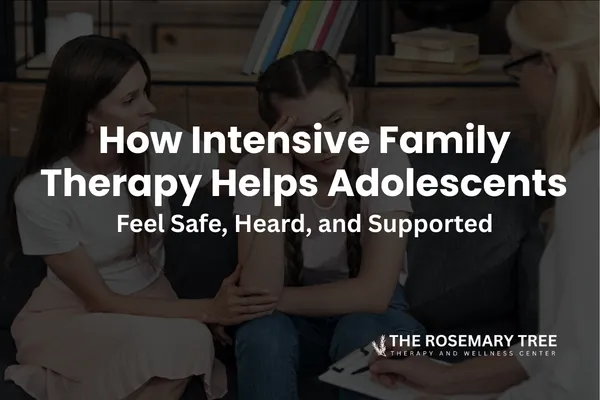
Intensive Family Therapy for Adolescents: Safety, Support, and Being Heard | The Rosemary Tree
When parents begin searching for family therapy for adolescents, one of their biggest concerns is safety. Many parents seeking teen therapy worry their adolescent will feel blamed, pressured, or emotionally overwhelmed by therapy, especially when trust at home already feels fragile.
For families navigating anxiety, depression, emotional shutdown, anger, or withdrawal, therapy can feel risky. Parents want help, but they do not want to make things worse. This is where intensive family therapy Arizona offers a different and often more supportive approach.
Why adolescents struggle to feel safe in therapy
Adolescents are still developing emotionally and neurologically. When teens feel misunderstood, rushed, or judged, their nervous system moves into protection. This may look like withdrawal, defensiveness, or refusal to engage.
In traditional weekly therapy, limited time can make it difficult to rebuild safety once an adolescent becomes overwhelmed. For families seeking teen crisis therapy or stronger family mental health support, progress can feel slow or inconsistent.
Research from the National Institute of Mental Health explains how adolescent mental health conditions often involve heightened stress responses that affect emotions, behavior, and family relationships:
https://www.nimh.nih.gov/health/topics/child-and-adolescent-mental-health
How intensive family therapy creates emotional safety
Intensive family therapy provides adolescents with extended time to settle into the therapeutic process. Rather than rushing conversations, therapists can move at a pace that supports emotional regulation and trust.
At The Rosemary Tree, our Accelerated Family Therapy Intensives are grounded in trauma informed family therapy, meaning emotional safety comes before problem solving. Adolescents are not forced to share before they are ready. Instead, therapists focus on helping teens feel respected, supported, and understood.
This approach strengthens effective adolescent therapy by reducing pressure and allowing adolescents to engage more authentically.
Will my adolescent be blamed for what is happening in our family?
This is one of the most common fears parents express.
In intensive family therapy, adolescents are not treated as the problem. Behavior is understood as communication rather than defiance. Emotional outbursts, withdrawal, or shutdown often signal stress, fear, or unmet needs.
Using family systems therapy adolescents, therapists help parents and adolescents understand how each person’s responses affect the family dynamic. This reduces blame and helps families move toward shared responsibility and understanding.
The American Academy of Child and Adolescent Psychiatry emphasizes that involving the family system is often essential when treating adolescent mental health challenges:
https://www.aacap.org/AACAP/Families_and_Youth/Facts_for_Families/FFF-Guide/Psychotherapies-For-Children-And-Adolescents-086.aspx
Why longer sessions help adolescents open up
Many adolescents struggle to express themselves in short therapy sessions. By the time they begin to feel comfortable, the session often ends.
Family therapy intensives allow adolescents more time to settle emotionally and build trust. With fewer interruptions, therapists can support teens through difficult emotions without rushing or shutting conversations down.
Parents seeking teen therapy often report that this extended format helps their adolescent feel genuinely heard for the first time.
The Child Mind Institute offers parent education explaining how adolescent behavior often reflects emotional overload rather than intentional defiance:
https://childmind.org/topics/concerns/mental-health/
How parents are supported alongside their adolescent
Another key part of intensive family therapy is parent support. While adolescents engage in therapy, parents may also work with a clinician to process their own fear, stress, and uncertainty.
This parallel support helps parents respond more calmly and consistently at home. When parents feel supported, adolescents often feel safer too. Families exploring family therapy alternatives often find this coordinated approach more effective than focusing on the adolescent alone.
Final Thoughts
If your adolescent feels shut down, overwhelmed, or resistant to therapy, it does not mean they are unwilling to heal. It may mean they need more time, safety, and support than weekly sessions can provide.
At The Rosemary Tree, our Accelerated Family Therapy Intensives are designed for families with adolescent children experiencing mental health challenges. These intensives allow adolescents, parents, and the family system to receive focused support together in a structured, multi-day format.
If you feel this approach may be right for your family, you can submit an inquiry through our Intensive Therapy page to start a conversation. We are available to talk with you, answer questions, and help you determine next steps.