
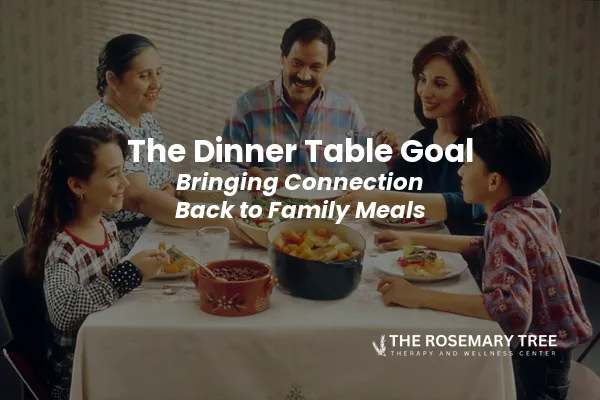
The Dinner Table Goal: Bringing Connection Back to Family Meals With Teens
Let's talk about the dinner table.
Maybe yours is silent. Everyone's on their phone, someone's eating in their room, and you're wondering when "family dinner" became you and a plate of tacos.
Or maybe it's tense. Every meal turns into a grades conversation, someone storms off, and you've started dreading 6 p.m.
Either way, here's the goal I want you to hold onto. Not a perfect kid. Not a perfect meal. Just a regular Tuesday evening where you sit around the table and there's some laughter, some playfulness, and some engagement.
And here's the good news: you're probably not that far off.
Why do family dinners matter for teens?
Shared meals are one of the few times in a busy week when everyone is in the same place at the same time. Research on family meals has consistently linked regular, positive mealtimes with better emotional well-being in adolescents. The key word there is positive. A meal that's a nightly battle doesn't do the same thing.
From where I sit as a family therapist, dinner matters because it's a rhythm. It tells your kid, "No matter what happened today, there's a place for you here." Teens act like they don't care about that. They do.
How do I get my teen to come to family dinner?
Start by making the table a place they'd actually want to be. A few ideas:
Lower the bar. Two or three dinners a week together is a win. So is breakfast. So is a late-night snack at the counter.
Give them a job they like. Picking the music, choosing the menu one night a week, or being in charge of the hot sauce. Ownership invites participation.
Let them cook. Teens who make the meal tend to stick around to eat it. Taco night, homemade pizza, breakfast-for-dinner. Keep it playful.
Decide on phones together. Instead of a rule handed down from above, talk about it as a family. "Phones in the basket during dinner, including Mom's and Dad's" lands a lot better when the adults follow it too.
What should we talk about at dinner with teenagers?
This is the big one. Dinner is not the time for the report card, the messy room, or the thing they did last weekend. Save those for another moment. When dinner becomes the place where problems get addressed, kids learn to avoid dinner.
Instead, try a little play:
Highs and lows. Everyone shares a high and a low from the day. Add a "buffalo" (something random or weird) for bonus laughs.
Would you rather. "Would you rather only eat Slurpees or only eat Snickers bars for a year?" Silly questions get real conversations going.
The question jar. Fill a jar with questions and pull one each night. Let your teen add some too.
Story time. Tell them something embarrassing from when you were their age. Trust me, my freshman-year haircut story has bought me a lot of credibility.
Let them teach you. Ask about a game, a song, a creator, or a show they love, and actually listen.
If you want more question ideas, our post on better questions than "How was school?" has a whole list.
How do we get through Thanksgiving with a struggling teen?
Thanksgiving is the Super Bowl of family dinners, and it can be a lot for a teen who's anxious, depressed, or just not in a great place with the family right now. A few things that help:
Preview the day. Tell them who's coming, how long it'll last, and what's expected. Surprises are hard on anxious brains.
Build in an exit. Agree on a signal or a spot where they can take a 15-minute break, no questions asked.
Run interference. If Uncle Ted always asks about grades or weight, have a plan to redirect.
Give them a role. Greeter, drink person, pie cutter. A job gives a teen somewhere to be.
Keep expectations kind. Showing up for part of the day is still showing up.
For more on why the end of the year is so heavy for teens, read Teen Anxiety and the Holidays.
What if dinner always turns into a fight?
Then dinner is telling you something about where your family is right now, and that's okay. It's information, not failure.
Sometimes the tension at the table is about a stage your kid is going through. Sometimes it's a sign of something deeper, like anxiety, depression, or a relationship between parent and teen that's been strained for a while. When the fights keep coming and nobody knows how to stop them, that's when a guide can help.
At The Rosemary Tree, we treat the whole family, not just the kid. That's true in our weekly therapy, and it's built into our after-school intensive outpatient program (IOP), where family sessions are part of the plan.
Frequently asked questions
How often should families eat dinner together?
There's no magic number. A few regular, positive meals a week matters more than forcing a nightly dinner that ends in a fight.
Should teens be allowed to have phones at the dinner table?
Most families do better with phones away during meals, but the rule works best when the whole family agrees to it, adults included.
My teen eats in their room every night. Should I make them come to dinner?
Invite more than you require. Give them a role, keep the conversation light, and start with one or two meals a week. If they're isolating in other ways too, that's worth paying attention to.
How do I help my anxious teen at Thanksgiving?
Preview the day, build in breaks, give them a job, and protect them from the questions you know will stress them out.
We'd love to help you get to that Tuesday night
If mealtimes at your house feel far from laughter right now, you're not alone, and you're probably closer than you think.
Give us a call or book a free 15-minute consultation. We'll listen to what's going on and share some ideas for getting your family back to enjoyable time together, at the table and beyond.
Happy Thanksgiving, friends. We'll talk soon.
Jason Ellis, LMFT, is the founder and clinical director of The Rosemary Tree in Phoenix, Arizona.